
"March drought"
200 article(s) found

How to bake Katim? -Growing environment Producing area Flavor Description
1. Baoshan City State-owned Lujiang Farm planted 12.6 mu in March 1991. There was no shade in the area. Irrigation was carried out once in dry season. The management level and fertilizer application level were medium and high. The average yield per mu in 1993/94 was 75 kg, 350 kg in 1994/95 and 225 kg in 1995/96

Introduction to the Ecological Environment of Coffee trees
Morphological characteristics Coffee Fruit Coffee Tree is a shrub or small tree of Rubiaceae; leaves opposite, leathery, long ovate; every March, the branches will appear white flowers, petals spirally arranged, the core of flowers jump around the petals, take a closer look, it is really like a small windmill playing in childhood, emitting the fragrance of jasmine; the fruit is oval, berry, crimson, hidden

Flavor characteristics of sun-exposed Katim coffee beans, regional varieties produced by grinding scale
The flavor characteristics of sun-dried Katim coffee beans the field management measures of varieties in the grinding scale production area are suitable for the management of general small-grain coffee. Propagation method: adopt seed propagation, select 5-year-old fine mother tree, harvest fully mature, fruit shape is normal, full, size is basically the same, with two-seed fruit as seed, using sand bed to promote germination, plastic bag seedling. Selection year of suitable forest land

The morphological characteristics of coffee trees the geographical distribution of coffee trees
Coffee fruit Coffee Tree is a shrub or small tree of Rubiaceae; the leaves are opposite, leathery and long ovate; every March, the branches appear white flowers, petals spirally arranged, and the heart jumps around the petals. Take a closer look, it is really like a small windmill playing in childhood, emitting the fragrance of jasmine flowers; the fruit is oval, berry, crimson, hidden two

Yunnan small Coffee which tastes better? Yunnan Baoshan coffee beans? the story behind it.
Professional coffee knowledge exchange more coffee bean information please follow the coffee workshop (Wechat official account cafe_style) Qianjie-Yunnan Baoshan Coffee introduces the origin of Baoshan Coffee, related to a patriotic overseas Chinese Liang Jinshan. He was the first to introduce coffee to Baoshan. In 1952, Mr. Ma Xijin of the Institute of Tropical and Subtropical Economic crops, Yunnan Academy of Agricultural Sciences, sheltered in Dehong Prefecture.

Catimor: in 1959, the Portuguese mixed Brazilian Kaddura with Timo.
Professional coffee knowledge exchange more coffee bean information please follow Coffee Workshop (Wechat official account cafe_style) Catimor: in 1959, the Portuguese mixed Brazil Kaddura and Timo to cultivate a disease-resistant Katim / Katimo, which is now an important variety of commercial beans. Sun treatment, also known as drying, is the oldest method of treating raw beans.

How much is the top coffee bean? How much is a jin of coffee beans of good quality
Professional coffee knowledge exchange more coffee bean information please follow the coffee workshop (Wechat official account cafe_style) how much is the price of coffee beans per jin? At present, the market price of the more common coffee beans on the market is generally about 18 to 20 yuan per jin, while the coffee beans bought in Starbucks can buy about 100 yuan for half a catty. The price of coffee beans in Beijing is higher than that of Starbucks.

Introduction to the flavor and taste characteristics of Ethiopian coffee with unique high-quality coffee
In September 1974, a group of young officers formed the Coordination Committee of the Army, the Police and the Local Army (DERGUE, meaning SHADOW, and later generally referred to as the junta and the Mengistu regime) launched a military coup to overthrow the government of Haile Selassie and announced the end of monarchy and the establishment of an interim junta. In November, the interim military junta was changed to the interim military Administrative Council. In December, interim military administration

Planting techniques and soil Environment of Coffee trees
(1) weeding, covering the young coffee garden, weeds are easy to breed, especially in the rainy season, weeding should be done once a month. If the labor force is sufficient, clean the grass should be removed first. Adult coffee garden can be weeded once every 2 to 3 months. If you use herbicides, you should be careful not to spray on the branches and leaves of coffee, and it is more important and prudent to use them in young coffee gardens. Coffee has shallow roots and is vulnerable to adverse climates such as high temperature and drought.

Morphological characteristics and growth Environment of Coffee trees
Coffee is a perennial evergreen shrub or small tree of Rubiaceae. It is a horticultural perennial cash crop with the characteristics of fast growth, high yield, high value and wide market. Wild coffee trees can grow to a height of 5 to 10 meters, but coffee trees planted on the manor are often cut to less than 2 meters in order to increase their fruit and facilitate harvesting. The opposite leaves of coffee trees are long oval.

Introduction to the planting method of Coffee Tree what kind of natural environment is needed to grow coffee tree
Coffee tree is a shrub or small tree of Rubiaceae; leaves opposite, leathery, long ovate; every March, the branches will appear white flowers, petals spirally arranged, the heart of flowers jump around the petals, take a closer look, really like a small windmill playing in childhood, emitting bursts of jasmine fragrance; the fruit is oval, berries, crimson, containing two seeds, that is, we are familiar with coffee

What are the environmental and climatic requirements of coffee trees? What are the types of coffee trees?
Professional coffee knowledge exchange more coffee bean information please follow the coffee workshop (Wechat official account cafe_style) what is a coffee tree? Coffee tree is a shrub or small tree of Rubiaceae; leaves opposite, leathery, long ovate; every March, the branches will appear white flowers, petals spirally arranged, the heart of the flowers jump around the petals, take a closer look, it looks like a small child.

Small coffee Coffea arabica Linn Arabica coffee
Small coffee Coffea arabica L. Coffea arabica Linn. Sp. Pl. one hundred and seventy two。 1753; A. Cheval. Op. Cit. 196; A. E. Haarer, op. Cit. 13; Flora of Hainan 3: 349. 1974; Atlas of higher plants in China 4: 285, figure 5929. 1975; Tree Map of Yunnan, Volume 2: 1151. 1991. Small trees or large shrubs, 5-8 m tall

Yunnan fine coffee bean varieties planting geographical location climate altitude profile
Yunnan coffee is said to have been handed down by the French 70 or 80 years ago. The main production variety is Arabica Arabica, that is, the so-called Arabica coffee, commonly known as Yunnan Arabica coffee. Yunnan's high-quality geographical and climatic conditions provide good conditions for coffee growth. The planting areas are Lincang, Baoshan, Simao, Xishuangbanna, Dehong and other prefectures. Yunnan's natural conditions are very similar to those of Colombia

Coffee bean short investors may benefit from currency depreciation in emerging market countries
Short investors in coffee beans are likely to benefit from the devaluation of emerging market currencies. As a result of economic stagnation and the collapse of oil prices, the currencies of Brazil and Colombia, the world's largest supplier of Arabica coffee (Arabica coffee), have depreciated, with the Brazilian real down 25 per cent so far this year. In the past six months, the Brazilian real and the Colombian peso have exchanged exchange rates against the dollar.

Ethiopian Yega Sheffivoka Coffee Flavor Flavor Coffee introduction
In February 1977, Lieutenant Colonel Mengistu Haier Maryam (MENGISTU HAILE MARIAM) launched a military coup and served as Chairman of the interim military Administrative Council and head of State. In 1979, the Ethiopian Labor people's Party Organization Committee, dominated by soldiers, was established to implement an one-party system. In 1984, the Ethiopian Workers' Party was formed according to the Soviet Communist Party model. Mengistu, September 1987

How long does it take for coffee trees to blossom to mature coffee berries?
How long does it take for coffee trees to bloom to mature coffee berries? coffee trees can only grow in the tropics and subtropics, and coffee trees can grow in different climates, soils, elevations and rainfall in the middle of the coffee belt. Coffee trees thrive in Africa's hot and humid canyons and forest rainforests, and it still produces high-quality coffee in cold, foggy, windy Central America.
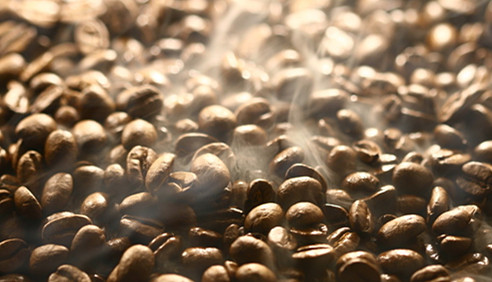
The devaluation of the Brazilian currency is good news for coffee bean bears.
Short investors in coffee beans are likely to benefit from the devaluation of emerging market currencies. As a result of economic stagnation and the collapse of oil prices, the currencies of Brazil and Colombia, the world's largest supplier of Arabica coffee (Arabica coffee), have depreciated, with the Brazilian real down 25 per cent so far this year. In the past six months, the Brazilian real and the Colombian peso have traded against the US dollar.
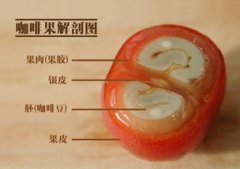
What does coffee look like, the first step to coffee?
The fruit is oval, berry, dark red, and contains two seeds, known as coffee beans. The first flowering period of the white flower red fruit coffee tree is about three years old. The white flower has five tubular flowers, with a faint jasmine fragrance. The inflorescences are dense and arranged in clusters. Flowers, flowering two or three days later will die, a few months later began to bear fruit. the fruit is
Morphological characteristics of Coffee trees the latest Coffee Information in China
The ripe coffee berries look like cherries and are bright red with sweet flesh and contain a pair of seeds, namely coffee beans (Coffee Beans). Coffee varieties can be divided into small-grain, medium-grain and large-grain species, the former contains low caffeine content and strong flavor, while the latter two have high caffeine content but poor flavor. The coffee sold in the world is generally made up of small and medium seeds in different proportions.